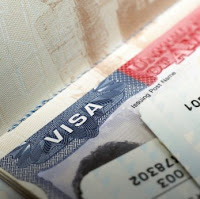
Wednesday, February 25, 2009

CIS expands Premium Processing for I-140s

USCIS announced yesterday that, starting on 3/2/09, it will allow Premium Processing (PP) for I-140s where the beneficiary (foreign national employee) has already reached the end of her H-1B 6-year maximum stay. Premium Processing for I-140s is now allowed where the beneficiary is currently in H-1B status and about to reach the end of their 6 years. The new provision will expand PP to beneficiaries who have already passed the end of their 6 years.


Background

Immigration law permits applicants to extend their stay in H-1B nonimmigrant status past 6 years in two situations:

1) they can extend in increments of up to three years, provided they are the beneficiary of an approved Form I-140 and an immigrant visa is not immediately available; or

2) they can extend in increments of up to one year, provided the Form I-140 petition or underlying labor certification has been pending for at least 365 days.

Premium Processing for I-140s helps foreign nationals who cannot extend their H-1B under 2) above because the I-140 or labor certification is not pending for the required 365 days. These foreign nationals may be able to extend H-1B status if they have an approved I-140 AND their priority date is backlogged.

For a copy of yesterday's Press Release about this new provision, see here: http://www.uscis.gov/files/article/I-140_premium_24feb09.pdf

Consequences of layoffs on H-1B workers - Part 2


(continued from yesterday)

6. What happens to my green card process if I am laid off?


If you have reached the final step of the permanent residence process, and have filed your Adjustment of Status (AOS), you may be able to remain in the US while the AOS is pending. Just having the AOS filed does not, however, allow you to work in the US or return from international travel once your H-1B ends. You must have specific work authorization (an EAD) to allow you to work and Advance Parole to allow you return from overseas.


A foreign national is permitted change employers and keep the AOS filing if the AOS has been on file for 180 days or more, and the new occupation is in the “same or similar occupational classification” as the one that formed the basis of the permanent residence filing. This means that e H-1B worker who was a Software Engineer for Employer A and then got a job as a Software Engineer for Company B would qualify. However a Software Engineer who went to work as a French teacher could not use this “portability” provision.


If you have not reached the final step of the permanent residence process, unfortunately you cannot complete the existing permanent residence process.


Link to Consequences of layoffs for H-1B Workers, Part 1


Monday, February 23, 2009

Consequences of layoffs on H-1B workers - Part 1


A common question that I am asked, especially in the current economy, is what happens to a foreign national's immigration status and her pending cases when she is laid off. In this 2-part article, I will address the consequences for H-1B workers. Today, I will cover the effect of a job loss on H-1B status. Tomorrow, I'll discuss the effect on the foreign national's permanent residence process.

1. How long can I stay in the US after my H-1B job ends?
A person in H-1B status is legally authorized to remain in the US only as long as they are employed with the H-1B petitioner (“sponsor”).
If the employee is laid off, the H-1B worker and dependents in H-4 status immediately lose their status. In reality, most people need at least a few weeks to pack up and sell their residence, take children out of school, etc. While staying in the US to finalize arrangements for leaving is not strictly “legal”, it is very common for foreign nationals to do this.

Laid-off H-1B employees could file to change to visitor status to allow them remain in the US to make repatriation arrangement.
As long as the application is filed while the worker remains in status, s/he will remain in status for up to 120 days while the change of status application is pending. The worker will also have to file a new non-immigrant application if s/he stays in the US and finds a new position.

2. Can I stay in the US to look for another job?
The US Citizenship and Immigration Service (CIS) will commonly approve a new H-1B petition as an automatic change of employer if the H-1B holder can provide a paystub less than 30 days (and sometimes even 60 days) old.
This means that CIS may approve the change of employer even if the employee has not worked for the former employer for a month or more.

The gap between when a laid-off H-1B worker ends their job and when they file the new H-1B petition is not strictly a period when they are in status.
However, as mentioned. CIS will usually overlook this gap in approving a change of employer.

If a new employer files a new H-1B petition and CIS does not approve an automatic change of employer, CIS might still approve the H-1B as a “notify.”
This means the worker must leave the US, get a new H-1B visa at a consulate if the existing visa has expired, and return in the new H status to “effect” the new employer’s H-1B.

If the H-1B worker manages to find a new employer before leaving the old job, or very soon afterwards, s/he might be eligible for H-1B “portability.”
This allows a H-1B worker to start working for a new employer as soon as the new H-1B petition is filed, rather than wait for it to be approved. Another piece of good news is that the H-1B worker should not be subject to the H-1B cap since s/he was already counted.

3. What are my employer’s obligations if I am laid off?
The H-1B regulations require an employer to pay “the reasonable costs of return transportation of the alien abroad” if the H-1B worker is dismissed before the H-1B period ends.


4. Can I collect unemployment or other benefits while unemployed?

When a nonimmigrant remains in the US in a visa category that prohibits employment (e.g. B-2), or while an employment-based visa is pending, the person is generally not eligible to collect unemployment compensation under most states' laws.
This is because unemployment statutes usually require that an individual must be available to work and authorized to accept work to be eligible for benefits. This means that these nonimmigrants cannot claim benefits even though they paid unemployment taxes while they were employed.

5. Can I change to another status to stay in the US?

As mentioned above, you can request a change to visitor (B-2) status.
If you are able to find a new employer, you may be able to use one of the other work-authorized statuses if the H-1B is not appropriate. For example, if you are Canadian or Mexican you might be eligible for a TN status if you are working on one of the TN occupations. If you enroll in school you could get F-1 status.

The categories for which you are eligible are very case-specific, so it is critical to get formal legal advice about your exact situation.


Link to Consequences of layoffs for H-1B Workers, Part 2

Friday, February 20, 2009

NPR on temporary agricultural workers


NPR's "Morning Edition" this morning had a very interesting segment on temporary agricultural workers in Arizona, including those on H-2A status (blogged here on 12/12/09: http://martinvisalaw.blogspot.com/2008/12/new-rules-for-temporary-farmworkers.html). The reporters discussed the fact that many of the farm workers this year are permanent residents originally from Mexico, and now living in Mexico again because it is cheaper than living in the US.
Due to the economic situation in the country, the farmers in this area have planted up to 40 percent less," says Janine Duron, executive director of the Independent Agricultural Workers' Center, a nonprofit that connects workers with growers. "So there's been less of a demand for farm workers. And there was just about enough demand to be met with the local domestic farm workers.
These workers might formerly have worked in higher-paying industries, such as construction or hospitality.
More H-2A visa workers will likely be needed when the recession ends. But for now, older so-called domestic farm workers and former construction workers will take the jobs — unless things get so bad that U.S. citizens are willing to move across the country for five months' work in these lettuce fields at $350 a week.

Thursday, February 19, 2009

NYT on Expedited Citizenship for Military Personnel


I ran an article on this blog on February 4 about the new naturalization rules for military personnel: http://martinvisalaw.blogspot.com/2009/02/uscis-issues-new-fact-sheet-on-military.html. The New York Times then ran a story last weekend about the US government's plans to offer expedited citizenship to foreign nationals who served/are serving in US armed forces. (Click on headline above for a link to the article online)

The article quotes recruiters as expecting that:
the temporary immigrants will have more education, foreign language skills and professional expertise than many Americans who enlist, helping the military to fill shortages in medical care, language interpretation and field intelligence analysis.
The New York Times article explains that the program to allow non permanent residents to enlist will be limited to 1,000 in the first year. The new program will NOT allow undocumented immigrants to joing the military.
The Army’s one-year pilot program will begin in New York City to recruit about 550 temporary immigrants who speak one or more of 35 languages, including Arabic, Chinese, Hindi, Igbo (a tongue spoken in Nigeria), Kurdish, Nepalese, Pashto, Russian and Tamil. Spanish speakers are not eligible. The Army’s program will also include about 300 medical professionals to be recruited nationwide.
Language experts will have to serve four years of active duty, and health care professionals will serve three years of active duty or six years in the Reserves. If the immigrants do not complete their service honorably, they could lose their citizenship.
In recent years, as American forces faced combat in two wars and recruiters struggled to meet their goals for the all-volunteer military, thousands of legal immigrants with temporary visas who tried to enlist were turned away because they lacked permanent green cards, recruiting officers said.


Monday, February 16, 2009

Visa Bulletin for March 2009 released


The US Department of State has released the Visa Bulletin for March 2009. In most categories there is very slight movement forward, just by a few weeks or months, if at all. Priority dates for Mexican nationals in the employment-based 3rd and "other workers" categories show the greatest movement. The 3rd preference category moves forward by 4 1/2 months, while the "other worker" category advances by 18 months.

Saturday, February 14, 2009

Stimulus bill restricts H-1B new hires.

The economic stimulus bill passed by Congress yesterday contains restrictions on hiring of H-1B workers by financial institutions. Under a provision in the bill, any firm receiving TARP (Troubled Asset Relief Program) funds will be automatically considered H-1B dependent, regardless of the percentage of H-1B workers on the payroll. Normally, H-1B dependent companies are those with over 15% of their workers on H-1B visas.

The H-1B dependent designation subjects employers to a number of provisions, including a good faith effort to hire US workers first. Under the stimulus bill, any new H-1B hires by companies receiving funding would by subject to the H-1B dependent rules. These rules include attesting to actively recruiting American workers; not displacing American workers with H-1B visa holders; and not replacing laid off American workers with foreign workers.

These provisions could be elaborated in conference, and it remains to be seen how the provisions will affect new H-1B hires subject to the H-1B cap.

Monday, February 9, 2009

Can I "reactivate" an old green card?


People often wonder if they can enter the United States to work, using a permanent resident card (green card) that they got when they last lived here many years ago. These people have usually been outside the US, in their home countries, for years and are now considering returning to the US. Permanent residence is granted to a person on the basis, not surprisingly, that they intend to reside in the US.

If a permanent resident is going to work outside the US for 6 months or longer, we recommend that they apply for a re-entry permit. This is a document requesting permission to re-enter the US after an extended absence. Requesting a re-entry permit notified CIS in advance that you plan a protracted stay, however that you don't intend to abandon permanent residence.


A person who has returned to their home country for years and now wants to "reactivate" their green card is unlikely to have been filing for re-entry permits. In those situations, it is unlikely that immigration at the airport (CBP) will admit the person as a permanent resident. If CBP questions the traveller and finds out that the traveller has been living outside the US for years, CBP will almost certainly revoke permanent residence and confiscate the card. This is not an unreasonable action if a former permanent resident really has shown the intention of abandoning their US residence.
It is likely that the CBP officer who revoke permanent residence will allow the traveller to "withdraw" their application for admission to the US. However, in the worst case scenario, the officer could conclude that the traveller had committed fraud in attempting to enter as a permanent resident. A finding of fraud means a permanent bar to ever entering the US, so this possibility, even if unlikely, should be considered very seriously.

Wednesday, February 4, 2009

USCIS issues new fact sheet on military naturalization


The USCIS has issued a new fact sheet on the special rules that apply to naturalization for military personnel. A member of the U.S. armed forces must meet some of the general requirements for naturalization, such as good moral character, whereas some other requirements are reduced or waived. Filing fees and biometrics are completely waived as are the residence and physical presence requirements.

A military person can apply for naturalization if he or she has:
  • Served honorably in the military for at least one year;
  • Obtained lawful permanent resident status;
  • Filed an application while still in the service or within six months of separation.

A person can apply for "wartime naturalization" even if not a permanent resident if he or she has:

  • Served honorably in active-duty status for any period of time; and
  • Such active-duty service was during a specifically designated period of hostility.
For more details about naturalization for military personnel, see here.

Saturday, January 31, 2009

I-9 effective date delayed to April 3, 2009

The USCIS has delayed the effective date of the new I-9 form for 60 days, to April 3, 2009. See the CIS website here.

Wednesday, January 28, 2009

2009 Poverty Guidelines published

The US Department of Health and Human Services has published its poverty guidelines for 2009. The guidelines for the 48 contiguous states and DC are:

1 person in family: $10,830
2 people: $14,570
3 people: $18,310
4 people: $22,050
5 people: $25,790
6 people: $29,530
7 people:$33,270
8 people: $37,010

Alaska has different levels.

These guidelines are relevant in immigration law because family-based permanent resident applications require an Affidavit of Support from the "sponsoring" relative. The relative must show that s/he has income or assets worth at least 125% of the relevant poverty guideline figure. So, for example, a woman in New York who is petitioning for her husband and his child needs to show income/assets of at least $22,887.50 to meet the I-824, Affidavit of Support requirements.

Monday, January 26, 2009

New Form I-9 published


NEW FORM I-9 PUBLISHED ON CIS WEBSITE

The US Citizenship and Immigration Service has now posted the new Form I-9 on its website. The
new form MUST be used from 2/2/09 onwards. The major changes are:
  • Expired documents are no longer acceptable. A document containing no expiration date, such as a Social Security card, will be deemed unexpired.

  • Documents that are no longer issued by USCIS, such as the Form I-688 "Temporary Resident Card" and forms I-688A and I-688B "Employment Authorization Cards" are no longer acceptable documents.

  • The following documents are now acceptable for establishing both identity and employment authorization and have therefore been added to List A of the List of Acceptable Documents:
  1. Foreign passports containing a temporary I-551 printed notation on a machine-readable immigrant visa. The pre-printed temporary I-551 notation is issued after the individual is admitted to the United States as a lawful permanent resident.
  2. Passports from the Federated States of Micronesia or the Republic of the Marshall Islands with a form I-94 or I-94A.

Friday, January 23, 2009

Beware of fake immigration lawyers

The New York Times has posted an article about a Bronx man who had posed as an immigration lawyer for over 15 years, without having any law license. The man is charged with three counts of defrauding clients and faces up to 7 years in jail.

The article reminded me of a case I handled very early in my immigration career, in about 1997. A family came to my then law firm after paying thousands of dollars to a "notario" who promised to help them get permanent residence. The family had no legal basis for permanent residence, however the notario filed bogus asylum claims for them. These asylum applications had no foundation, so they were not surprisingly denied and the family ended up in deportation (as it was called then) proceedings instead.

This was a wonderful extended family, hard-working, involved in the community, active in their church and in volunteer work, and not wealthy. They had spent a lot of their savings on this notario, only to end up in a far worse situation than before they ever met her.

Unfortunately, this story is not uncommon. In some Latin American countries, "notarios" are licensed lawyers, so many people mistakenly believe that someone calling themselves a "notario" in the US is also a lawyer. As the American Bar Association states:
“Notarios” or “Immigration Consultants” have become an increasingly serious problem in immigrant communities. Notarios operate throughout the U.S. and use false advertising and fraudulent contracts for services which cannot be provided. Notarios present themselves as qualified to help immigrants obtain lawful immigration status, and may charge a lot of money for help that they never provide. Often, immigrants’ permanently lose opportunities to pursue immigration relief because a notario has damaged their case.
Various organizations actively advocate against notarios, and there are procedures in each state to register a complaint against a notario. This link contains information about the complaint procedure. The American Immigration Lawyers Association has published information leaflets for each state. Attached is a sample for Texas. Please contact us for information on other states.

Wednesday, January 21, 2009

Revised naturalization test explained

On October 1, 2008, USCIS started administering a new naturalization test to applicants for US citizenship. Anybody who filed their N-400 (the form used to apply for naturalization) after that date must take the new test. Anyone who applied before that date and is interviewed before 10/1/09 can take the old test if they prefer. Anyone who is interviewed after 10/1/09, regardless of when they filed the N-400, must take the new test.

The USCIS website states that:
The content of the new civics test has been completely revised. The content now follows a basic U.S. history and government curriculum and focuses on fundamental principles within three categories: American government, American history, and integrated civics. The test is still administered orally and an applicant must still answer six out of 10 questions correctly to pass the civics test.
Full details of the new test, including extensive study materials, are here.


Monday, January 19, 2009

How do I get US citizenship?


In general, you can apply for US citizenship after 5 continuous years as a permanent resident (PR) or 3 years as a PR if you were married to a US citizen for the 3 years.

In addition to being a permanent resident for the prescribed periods, there are very specific residence requirements you must meet before getting citizenship. Generally, you must have been physically present in the US for half of the 5/3 years before applying for citizenship. You must also have resided for at least 3 months in the state where you are filing. Limited exceptions exist to the residence rules, and it is important that you have not done anything to break the period of residence. Please contact your attorney if you’d like specific advice about your situation.

In addition to the residence and physical presence requirements, an applicant for naturalization must show the following:

  • Good moral character
  • Attachment to the principles of the US constitution
  • Willingness to "bear arms" or perform other work on behalf of the US if required
  • Ability to speak, read and write English (unless eligible for a waiver of this requirement)
  • Knowledge of history and government of the US (unless eligible for a waiver)
There are special rules for people serving in the US Armed Forces, who can get a waiver of the usual residence and physical presence requirements, and do not need to pay filing fees. In addition, a person may be able to apply for citizenship before becoming a PR if the application is filed while on active duty, or within 6 months of leaving service. A person who served in the armed forces during hostilities and was honorably discharged or still serves, can also apply for citizenship without being a PR.

Information on naturalization generally is here. Information on naturalization for military personnel is here.

Friday, January 16, 2009

Does the US allow dual citizenship?


Many people wonder whether the US allows dual citizenship. Specifically, people often ask if they can retain their original, non-US, citizenship and still become US citizens. The short answer is "yes", if the other country allows dual citizenship. For instance, I have dual US and Irish citizenship, since I was born and raised in Ireland and am a naturalized US citizen. Based on the US State Department regulation on dual citizenship, the US Supreme Court stated that dual citizenship is a "status long recognized in the law” and that
a person may have and exercise rights of nationality in two countries and be subject to the responsibilities of both. The mere fact he asserts the rights of one citizenship does not without more mean that he renounces the other.
Kawakita v. U.S., 343 U.S. 717 (1952).

The US does not encourage or favor dual citizenship. As the State Department states on their website:
The U.S. Government recognizes that dual nationality exists but does not encourage it as a matter of policy because of the problems it may cause. Claims of other countries on dual national U.S. citizens may conflict with U.S. law, and dual nationality may limit U.S. Government efforts to assist citizen s abroad. The country where a dual national is located generally has a stronger claim to that person's allegiance.
Nevertheless, under US law, it is perfectly legal to hold US and another citizenship.

For information on which countries allow dual citizenship, please check local country laws. Some information is in
this document, however the document is from 2001 so should not be exclusively relied upon.

Wednesday, January 14, 2009

Visa Bulletin for February 2009 released


The US Department of State has released the new Visa Bulletin for February 2009. In family-based categories, there is very slight movement forward, but just by a few weeks in most categories. Employment-based categories advance by 5-6 months for India and China EB-2, by 4-5 months for China and Mexico EB-3, and unfortunately the dates retrogress for EB-3 Other Workers from China, India and Mexico. http://travel.state.gov/visa/frvi/bulletin/bulletin_4417.html.

(Credit for this photo and the last one go to my brother-in-law, Paddy, from the family's recent visit to New York)

Tuesday, January 13, 2009

Separating Fact From Fiction About Immigrants and Crime


An article in the ImmigrationImpact.com website debunks the myth that immigrants are more likely than others to commit crimes. The article states that:
Numerous national and state-level studies over the past hundred years have found immigrants are less likely than the native-born to commit crimes or be in prison, and high rates of immigration are not associated with higher crime rates.
The article quotes from recent articles in The Washington Post, and in the New York Times. They describe the NYT article thus:
In a different vein, the New York Times today ran a story on the rising number of federal prosecutions for immigration offenses [as opposed to actual violent crimes], which the Department of Justice ostensibly has pursued with increased vigor as part of the government’s broader counterterrorism strategy. But, the story notes, while immigration prosecutions have skyrocketed over the past five years, “white-collar prosecutions have fallen by 18 percent, weapons prosecutions have dropped by 19 percent, organized crime prosecutions are down by 20 percent and public corruption prosecutions have dropped by 14 percent.” One might question the wisdom of devoting more and more resources to the prosecution of undocumented immigrants for “illegal entry” at the expense of, say, arms traffickers who actually do have an adverse impact on public safety.
As regards the last sentence - my thoughts exactly on reading that NYT article.

Monday, January 12, 2009

Another US citizen with repeated problems returning to the US

Last Friday I blogged about a travel writer's experience in requesting his travel files from the USA government. I also referred to the problems that many people encounter when returning to the US, because they are incorrectly listed on the US government's "watch lists", or they have names similar to those on the lists. Coincidentally, there was another article on this issue in yesterday's Dallas Morning News, reprinted from The Washington Post. Juan Fernando Gomez is a director in the Afghanistan and Pakistan region for Chemonics, a Washington-based international development consulting firm. He describes his feelings thus:

I call it the little room. In most cases it's actually not that small, but my claustrophobia seems to kick in as soon as the immigration officer separates me from the other passengers on my flight and escorts me through a door into my own private travel hell.....

.......The real terror begins when my toes touch the yellow line, where I wait to be called forward. Approaching the immigration officer before being summoned could make me appear too eager (and often earns me a stern reprimand). On the other hand, any hesitation could be interpreted as a sign that I'm afraid of facing the law. So I walk up to the officer and nonchalantly hand over my bright blue passport. Seconds feel like hours as he starts hitting the "page down" key on his computer, scanning screen after screen, periodically glancing at me and my passport. This is when I break out in a cold sweat, which makes the officer even more dubious. When he reaches for a yellow highlighter and marks my customs slip, I know I'm headed to the little room.

Mr. Gomez describes the delays and security checks that he must endure every time he enters the US. He understand why, to a degree:

My name is common in Latin America, the Spanish equivalent of John Smith. It also seems to be particularly popular among law-breakers. I once sneaked a peek at an immigration officer's computer and saw an entire screen full of my doppelgangers. Who knows how many of them were bad guys and how many were law-abiding saps like me?

It doesn't help that my travel habits are similar to those of people who actually belong on a watch list. I grew up in Medellín, Colombia, during the height of the Pablo Escobar drug wars and have worked for the better part of the past decade in some of the most dangerous places in the world. In countries such as Afghanistan and Colombia, I help farmers find legal, profitable and sustainable alternatives to growing coca and poppies, the raw material for cocaine and heroin. So I guess it's understandable that my passport -- packed with added pages and stamps marking my entry into and exit from countries such as Cambodia, Bolivia and Haiti -- raises eyebrows.

I realize that DHS needs to screen passengers, but does it really need to detain US citizens repeatedly?

For the full text of the article, click on the headline above.

Friday, January 9, 2009

A rare peek at Homeland Security's files on travelers


I just came across an interesting article by a travel writer who did a FOIA (Freedom of Information Act) request for his travel documents. The article explains what he found - a lot more than you might expect. In addition, the author links to his experiences with secondary inspection on returning to the US (http://current.newsweek.com/budgettravel/2007/04/prove_youre_not_a_terrorist.html) and the comments to the original article also show plenty of experiences. I've had many clients in 12 years of immigration practice that are repeatedly stopped on returning to the US. It is next to impossible to get their names cleared, despite DHS claiming to have a procedure to resolve grievances.

Wednesday, January 7, 2009

Fingerprinting for re-entry permits

It is common, and recommended, for US permanent residents to file for re-entry permits if they will be spending long periods of time outside the US. In 2008, USCIS introduced a new requirement that applicants for re-entry permits needed to be fingerprinted before the permit would be issued. The biometric regulations were unclear as to whether an application would be abandoned if the foreign national left the US before having biometrics taken. The American Immigration Lawyers Association now believes that foreign nationals can leave the US and return for biometrics.

Biometric appointments are normally scheduled within about 30 days of CIS getting the I-131 (the application form for re-entry permits). However, foreign nationals often need to travel outside the US, usually to assume or resume the foreign position, sooner than 30 days after filing. In that case, the applicant can request expedited scheduling of the biometric appointment.

If the applicant gets an appointment and must leave before that date, she can try to walk into an Application Support Center (ASC, the office that takes biometrics) with proof of the imminent departure, and see if the ASC will take the biometrics. If the ASC refuses this request, or if the applicant does not get the appointment until after she has already left the US, she can reschedule. She can request a specific date, but CIS cannot schedule appointments more than 30 days in advance.

It is very important to attend the biometrics appointment, or request a reschedule to avoid the application being denied due to abandonment. The foreign national could reapply, but this is expensive and cumbersome.

Tuesday, January 6, 2009

Permanent residents (green card holders) now need to provide biometrics on entering US


On December 19, 2008 the DHS published a final rule expanding significantly the population of aliens subject to the United States Visitor and Immigrant Status Indicator Technology Program (US-VISIT) to include permanent residents. It becomes effective January 18, 2009.

US-VISIT will apply to all permanent residents entering or exiting from an air or seaport. Permanent residents entering through land ports of entry, however, will be required to provide fingerprints only if they are referred to secondary inspection. Not all land ports of entry currently have ten-print capability; installation at all ports is expected to be complete within the next month.

NB: The American Immigration Lawyers Association reminds permanent residents with criminal convictions that they are likely to be detected on returning to the US, and they should be prepared to present evidence regarding their admissibility.

The US-VISIT program was established in 2003 to verify the identity and travel documents of visitors. US-VISIT automates this verification by comparing biometric identifiers with information drawn from intelligence and law enforcement watch lists and databases. In many cases, this process begins overseas at a U.S. visa issuing post, where a traveler's biometrics—digital fingerprints and a photograph—are collected and checked against a watch list of known criminals and suspected terrorists. When the traveler arrives in the United States, border officials collect the same biometrics to verify that the person at the port is the same person who received the visa.

For more information on the US_VISIT program, please click on the headline above.


Wednesday, December 31, 2008

Malta added to Visa Waiver Program


The Department of Homeland Security (DHS) now allows Maltese nationals to make use of the Visa Waiver Program (VWP), as of December 30, 2008. Travellers will be able to enter the US for 90 days or less for tourism or business purposes without a visa, provided they have an e-passport and an approved authorization via the Electronic System for Travel Authorization (ESTA).

To travel to the United States under the VWP, an alien must be from a participating country and must (1) be seeking entry as a tourist for a period of 90 days or less; (2) be a national of a VWP participant country; (3) present an electronic passport or a machine readable passport issued by a designated VWP participant country to the air or vessel carrier before departure; (4) execute the required immigration forms; (5) if arriving by air or sea, arrive on an authorized carrier; (6) not represent a threat to the welfare, health, safety or security of the United States; (7) have not violated U.S. immigration law during a previous admission under the visa waiver program; (8) possess a round trip ticket; and (9) waive the right to review or appeal a decision regarding admissibility or to contest other than on the basis of an application for asylum, any action for removal.

For more information about the Visa Waiver program and ESTA, please see our blog post dated 11/17/08: http://martinvisalaw.blogspot.com/search/label/visa%20waive.

Tuesday, December 30, 2008

Can my spouse or children work when they accompany me to the US?


Foreign nationals usually want to know if their spouse and/or children can work when the family moves to the US because of the principal's job. Unfortunately, the answer is "No' in most cases, which can be very difficult for spouses who are used to having their own career and income in their home country.

The spouse will be eligible for work authorization if s/he is in dependent L-2 or E status. Spouses of people working in the US in status other than L-1 or E are not eligible to work in their dependent status (with limited exceptions for J-2 spouses). They may be eligible for another status, independent of the principal, that would allow them to work. Children in dependent status, except at the final stage of the green card process, cannot get work authorization.

The spouse can get work authorization by filing a Form I-765 with the USCIS. This can be done once s/he has entered the US in E/L status, and takes about 3-4 months for approval. Until the I-765 is approved, the spouse cannot work.

Monday, December 22, 2008

What is the difference between "visa" and "status"?


It is very common for people to use the term "visa" when referring to a foreign national's immigration status in the US. For example, people will ask "what visa do I need to study here?" or "when does your visa expire?" when they really want to know when the authorized stay expires. So what exactly is a "visa" and why is using that word confusing?

1. "Visa" vs "status" explained.
Unless you are Canadian, you will need a visa stamp on your passport to enter the US. The visa is the stamp on your passport that you get a U.S consulate outside the US. You cannot get a visa in the US. The visa is a travel document and is only needed to enter the US. Once you are in the US, you can stay past the expiration of your visa as explained below.

"Status" means that category in which you entered the US (e.g. H-1B, L-2, B-1) and the length of time you can stay here. This may not always be the same as the visa, for example if you entered in F-1 status, using an F-1 visa, and then changed to H-1B status.

2. How long can I stay in the U.S?
You can stay in the US as long as your status allows. Normally, this length of time is dictated by your I-94. The I-94 is the small white (or green if you used the Visa Waiver Program to enter) card that a US immigration officer put in your passport when you entered the US. If you had a change or extension of status approved after you first entered the US, the approval notice will have a new I-94 attached to the bottom. This new I-94 should show long you can stay here. However, any travel close to the approval, or after the approval, might affect how long you can stay in the US, so please ask your attorney for specific advice.

3. Do I need a new visa after my status has been extended?
In general, you only need a new visa stamp in your passport to return to the US after the current visa has expired. If you are not traveling, you can stay in the US after the expiration of your visa provided that your status has been extended. If you travel before your visa has expired, and you have an extension approval, you should show both the old, unexpired, visa and the extension approval, to the immigration officer and you should get the extension end date on your new I-94.

4. Do I need a new visa after my status has been changed?
If you are not traveling, you can stay in the US after a change of status without needing a new visa. After the change of status has been approved, however, you will need to get a new visa (showing the new status) before you can return to the US in the new status.

5. Where can I get a visa?
You can get a visa at a consulate in your home country or in another country to which you have close ties. Many foreign nationals also apply for visas at consulates in Canada or Mexico. Please check the website of the consulate where you want to apply, for specific procedures, document requirements, and waiting times.

Thursday, December 18, 2008

What are the steps to a green card via family sponsorship?


1. I-130 Immigrant Petition.
The US citizen or permanent resident petitioner (sponsor) files a Form I-130 with the USCIS or with a US consulate outside the US, if the petition is outside the US. If both the petitioner and the beneficiary are inside the US, and if they qualify as Immediate Relatives, the 2nd step can be filed concurrently with the first. In all other cases, the beneficiary must wait until the I-130 is approved and the priority date is current before he can file the 2nd step.

2. Adjustment of Status or Consular Processing
.
The final step is filed by the foreign national with the USCIS or with the consulate overseas (via the National Visa Center (NVC)). Whichever route the foreign national takes, his dependent family members also file for permanent residence at this stage. This final step involves the foreign national showing to USCIS or the consulate that there is no reason why should not be admitted as permanent residents, i.e. that there are no criminal, medical, fraud, etc bars to a green card. To show this, each applicant needs to provide certain medical reports, birth and marriage documents, police records, and other documents that will be explained in detail by your immigration lawyer.

(i) Adjustment of Status.
If the foreign national’s priority date is current*, he can file the Adjustment of Status (AOS) with the I-130. Filing the I-130 and AOS concurrently typically always happens in marriage-based cases. If the priority date is not current, the foreign national must wait until it is current before he can file the AOS. Once the USCIS is ready to approve permanent residence, the foreign national and his “sponsor” are called for interview at their local USCIS office. Once the immigration officer is satisfied that the relationship is genuine, and that the foreign national has no bars to admissibility, CIS approves the case.

(ii) Consular Processing.
If the foreign national prefers, he can complete the permanent residence at his home consulate. This may be required if the foreign national is outside the US when the process is started. If the foreign national chooses consular processing, he cannot do the 2nd step until and I-130 is approved AND the priority date is current.

* Please see the FAQs on my website for an explanation of these terms. http://www.martinvisalaw.com/

Tuesday, December 16, 2008

What are the steps to a green card through employment?

Yesterday I wrote about the different preference categories in permanent residence (green card) processing. Employers and foreign nationals frequently ask what the steps are to getting a green card, so these are outlined below. Tomorrow I'll explain the steps in a family-based case.

PERMANENT RESIDENCE APPLICATION PROCEDURE

1. Labor Certification

1. If the preference category requires a test of the US job market, the first step involves getting a labor certification (called PERM) approved by the Department of Labor (DOL). The employer needs to conduct a prescribed number of recruitment methods, to see whether there is an available, qualified, US worker interested in the position. Because of the uncertainties of the job market, this is the most unpredictable step in the immigration process. Martin Immigration Law works closely with employers to analyze the position, requirements, and advertising, and to answer questions regarding the process. However, no immigration law firm can review resumes or screen applicants.

2. I-140 Immigrant Petition

(i) With labor certification
Once the labor certification is approved, the employer files an immigrant visa preference petition with the US Citizenship and Immigration Service (CIS, formerly INS). This petition needs to prove the following to USCIS:
(a) that the DOL has approved a PERM on behalf of this foreign national;
(b) that the foreign national has the education and experience required as listed on the labor cert. The employee will need to provide educational documents and copies of experience letters. Martin Immigration Law will discuss these with the employee at Step 1.
(c) that the employer can afford to pay the salary listed on the PERM.


(ii) Without labor certification
If the employee is in a category that does not require labor certification, the process starts with the employer filing an I-140. In that situation, the I-140 needs to include extensive detail about the employee’s qualifications for the classification requested. For example, if the employer is asking that the employee be classified as an outstanding researcher, we must include evidence of the foreign national’s publications, presentations, research experience, education, recommendation letters, etc.

3. Adjustment of Status or Consular Processing

The final step is filed by the foreign national with the USCIS or with the consulate overseas (via the National Visa Center (NVC)). Whichever route the foreign national takes, her dependent family members also file for permanent residence at this stage. This final step involves the employee and her family showing to USCIS or the consulate that there is no reason why they are not permitted to get permanent residence, i.e. there are no criminal, medical, fraud, etc bars to a green card. To show this, each applicant needs to provide certain medical reports, birth and marriage documents, police records, and other documents that will be explained in detail by your immigration lawyer.

(i) Adjustment of Status
If the foreign national’s priority date is current*, s/he can file the Adjustment of Status (AOS) with the I-140, or while the I-140 is pending. If the priority date is not current, the foreign national must wait until it is current before she can file the AOS.

(ii) Consular Processing
If the foreign national prefers, she can complete the permanent residence at her home consulate. If she chooses this option, she cannot do the 3rd step until and I-140 is approved AND the priority date is current. Consular processing used to be faster than AOS sometimes, but with concurrent filing of AOS now available, consular processing is less popular. It is also more cumbersome because of the travel requirements and the need for more documents than with AOS.

* Please see the FAQs on my website for an explanation of these terms.

Monday, December 15, 2008

What are preference categories and priority dates in immigration law and why do they matter?


There are 2 main routes to permanent residence (green card) in the US: employment-based and family-based. Less common routes include asylum, diversity lottery and investment.

Employment and family-based applicants are divided into different categories. In family cases, the categories depend on the family relationship. For example, married sons and daughters of US citizens are 3rd family-based preference. Employment cases are divided based on the type of position and job requirements. For example, foreign nationals in positions that require a master’s degree OR a bachelor’s degree and 5 years of experience are 2nd preference, or EB-2. For more details, click on the Permanent Residence link here: http://www.martinvisalaw.com/faqs.html.
Your priority date is generally the date that the first step in permanent residence (PR) was filed for you. This usually means the date that (a) labor certification was filed; (b) an I-140 was filed (if no labor certification was required); or (c) an I-130 was filed in a family-based case. Priority dates are important because they determine your place in the queue for the final step of the PR process. The Department of State publishes a Visa Bulletin every month, showing which priority dates are “current” for the following month. You can only file the final step of the PR process if the priority date is current.

The waiting periods vary depending on your preference category and your country of birth. The latest Visa Bulletin, showing the current priority date, is here: http://travel.state.gov/visa/frvi/bulletin/bulletin_1360.html

Friday, December 12, 2008

New rules for temporary farmworkers announced


The US Citizenship and Immigration Services (CIS) published changes to immigration regulations that will "streamline the hiring process of temporary and seasonal agricultural workers." These workers come to the US in H-2A status, however employers have long complained that the process is so cumbersome that the growing season is over before the workers get the visas to come here. One reason for the delay is the fact that the Department of Labor has to certify that there is a shortage of US workers available. This procedure is, unfortunately, not made any easier by the new rules.

Immigrant rights advocates complain that the new rules do not allow undocumented workers who are currently in the US to apply for the visas. Why don't they just go home and apply? Because if they leave the US, they are subject to 3 or 10 year bars on returning, in most cases.

The changes to the H-2A regulations include:
• Relaxing the current limit on H-2A employers to petition for multiple, unnamed agricultural
workers;
• Extending from 10 days to 30 days the time a temporary or seasonal agricultural worker may
remain in the country following the expiration of his or her temporary H-2A stay;
• Reducing from 6 months to 3 months the time an H-2A worker who has spent 3 years in
the US stay outside the US before s/he cat get H-2A status again;
• Allowing H-2A workers, who are changing from one H-2A employer to another H-2A employer, to begin work with the new petitioning employer upon the filing of a new H-2A petition, IF the new employer is participating in USCIS’ E-Verify program;
• Prohibiting H-2A employers and recruiters from imposing certain fees on prospective H-2A
workers as a condition of employment;
• Requiring an approved temporary labor certification in connection with all H-2A petitions;
• Requiring employers to notify USCIS when H-2A workers fail to show up for work, complete the work more than 30 days early, are terminated, or abscond from the worksite; and
• Permitting the approval of H-2A petitions only for nationals of certain countries designated as
important to the operation of the program and appearing on a list to be published annually in the
Federal Register. The initial list of participating countries to be published simultaneously with
this Final Rule includes Mexico, Jamaica, and 26 others.


For an article on NPR's Morning Edition:

Thursday, December 11, 2008

Homeland Security reality TV show. Seriously.


My jaw dropped last night when I saw an ad on TV for a new ABC reality show: "Homeland Security USA." The show starting in January, and will focus mostly on the work of the Customs and Border Protection (CBP). It will also show other agencies, including the other immigration agencies.

The first episode, called "This Is Your Car on Drugs," will highlight the work of CBP at LAX Airport, a Blaine, Wash. U.S.-Canada border crossing, a stretch of the U.S.-Mexico border near Tucson, Ariz. and another border crossing at San Ysidro, Calif. It also will highlight an incident involving barbecued bats at the International Mail Center in Carson, Calif. Yeuch.

"It’s kind of a combination of the two most popular shows on TV, 'Cops' and '24,'" said David Heyman, director and senior fellow of the Homeland Security program at the Center for Strategic and International Studies. http://voices.washingtonpost.com/federal-eye/2008/12/homeland_security_gets_primeti.html?hpid=news-col-blog

This I have to watch........

Wednesday, December 10, 2008

Uncle Sam wants nonimmigrants


The Defense Department wants to enlist legal immigrants with critically-needed skills into the military. This pilot program is aimed at health care professionals holding needed medical specialties (physicians and nurses) and people with skills in strategic foreign languages and cultures, qualifications that are important to present and future military operations. The DOD has long allowed legal permanent residents to enlist. This program now allows nonimmigrant (temporary) visa holders to enlist, provided that they have lived in the US for at least 2 years.

Accelerated citizenship is available to people who serve the nation by joining the military during a time of war.

More information here: http://www.defenselink.mil/releases/release.aspx?releaseid=12384 and here: http://www.defenselink.mil/news/MAVNI-Fact-Sheet.pdf

Tuesday, December 9, 2008

Obama citizenship fight ends


The US Supreme Court has rejected a claim that President-elect Barack Obama is ineligible to serve as President because he had dual nationality at birth. The US Constitution requires presidents to be "natural-born citizens", i.e. born on US territory, not naturalized later. President-elect Obama was born in Hawaii, thereby qualifying him as a "natural-born citizen." Other lawsuits allege that his Hawaii birth certificate is fake. However independent bodies, including the nonpartisan Factcheck.org, believe it is genuine.

Friday, December 5, 2008

Slumdog Millionaire recommended. Thoughts on Maximum City?


I saw the movie Slumdog Millionaire recently, and really enjoyed it. I managed to see it at a preview screening with the director, Danny Boyle (also of Trainspotting fame, among others). I spoke with him afterwards and he was incredibly unpretentious, interested, and talkative. He probably asked me more questions than I asked him! He confirmed that the movie was partly shot in Dharavi, a huge slum in the center of Mumbai/Bombay. http://ngm.nationalgeographic.com/2007/05/dharavi-mumbai-slum/jacobson-text

About a million people live in one square mile in Dharavi. I first heard about Dharavi on the radio a few months ago, and have read more about it since. There are even tour companies that bring tourists through Dharavi - something I definitely want to do on my longed-for visit to India.

Seeing the movie, and reading about the horrific attacks in Mumbai, reminded me of a book that was recommended by an Indian client - Maximum City. This is a highly-acclaimed book by Suketu Mehta about the history and development of this amazing city. I haven't read the book, however it's next on my (ever-growing) list. http://www.metacritic.com/books/authors/mehtasuketu/maximumcity

Mehta wrote an op-ed for the New York Times on the Mumbai attacks: http://www.nytimes.com/2008/11/29/opinion/29mehta.html?_r=2&adxnnl=1&adxnnlx=1228496590-xLpVxPR5ICsOy6CWmgNorg

Tuesday, December 2, 2008

Deportees staying away because of recession?

NPR's Morning Edition is doing a very interesting series this week about the US-Mexico border. This morning, the show discussed the fact that many undocument immigranted that are deported back to Mexico decide not to try to return to the US. Their reasons include the lack of jobs and the increased danger and difficuly in crossing the border. The show says "In the past, many of these migrants would immediately try to cross back into U.S. But now, with the economic downturn and beefed-up security measures along the border, an increasing number are saying it's not worth the trouble. "

One immigrant aid agency in Nogales, Mexico (at the Arizona border), states that it helped 689 people return to their Mexican homes in 2007, but has helped 6,000 in 2008 so far.

The series continues for the rest of this week: http://www.npr.org/templates/story/story.php?storyId=97467703